Browser Session Persistence in Headless Agent Workflows
Keeping browser sessions alive between agent runs is what separates real work from restarts.
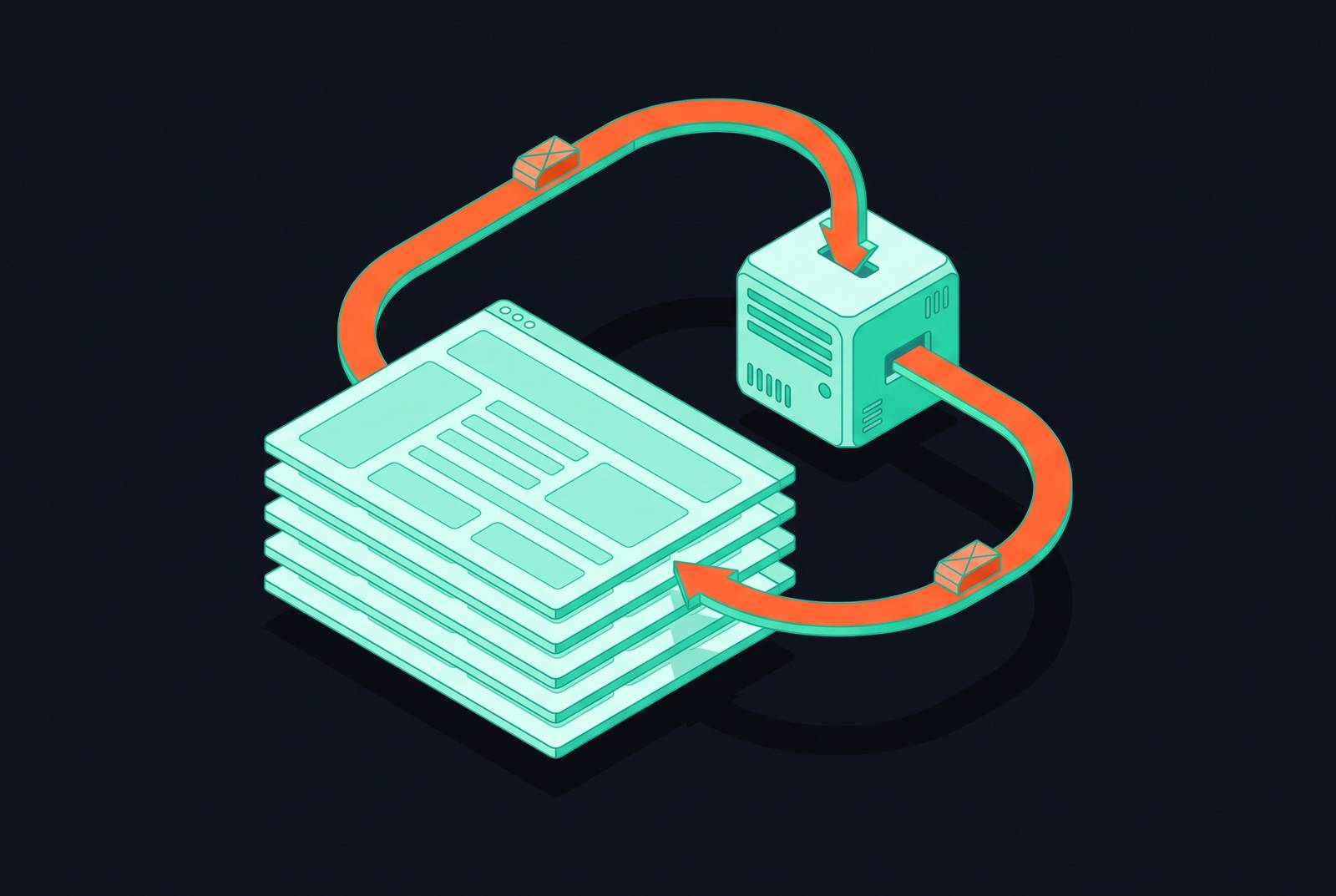
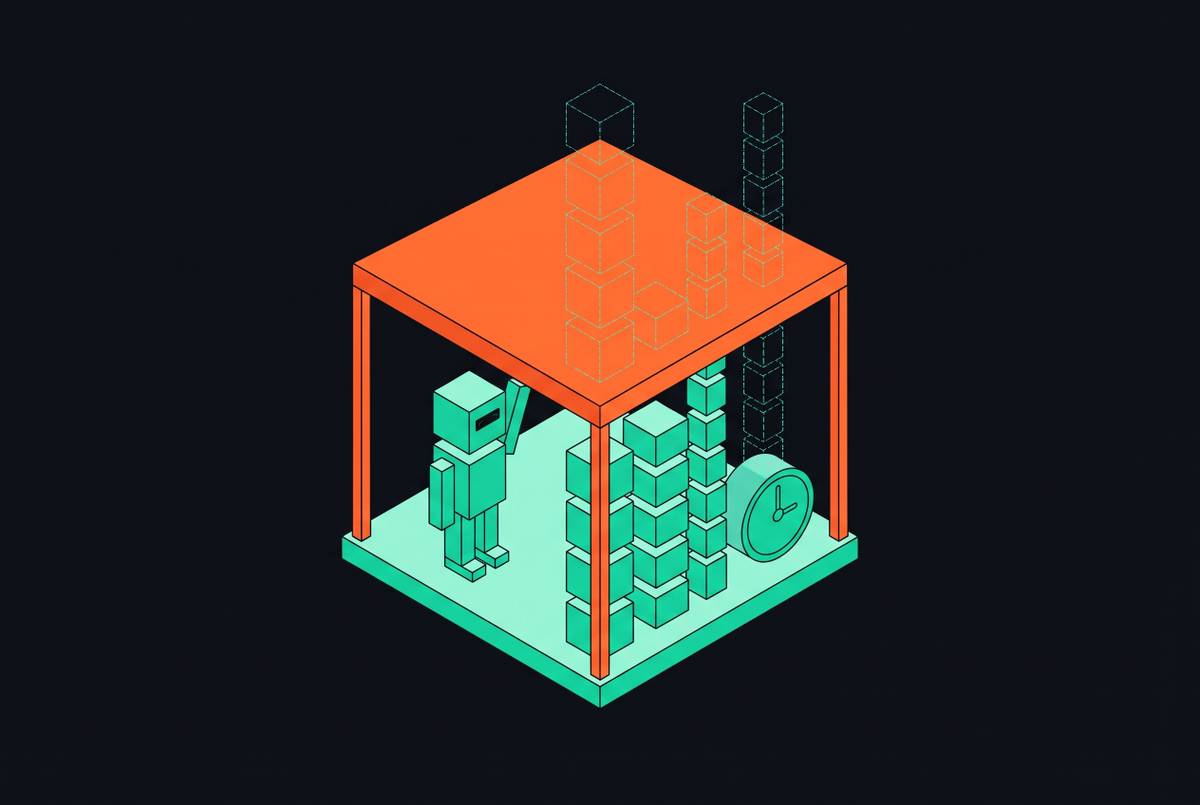
Browser session persistence, the ability of an agent to keep its cookies, profile data, and authenticated state intact between one run and the next, is the structural feature that separates agents capable of sustained web work from agents that restart blind every time they are invoked. An agent that loses its session mid-task does not degrade gracefully. It loses the login, loses the cart, loses its place in a multi-step workflow, and has no way to know any of that happened until the next action fails.
Browser session persistence as a structural requirement
Picture an agent that is midway through a four-step checkout flow on an e-commerce site. It has logged in, added items to a cart, and is one form away from completing the purchase. If that session does not survive the gap until the agent's next invocation, none of its progress exists anymore. The login cookie is gone, the cart is empty, and the agent has no internal signal that anything changed: it simply tries to proceed as though it still holds state it no longer has, and the action fails. The gap between checkout and failure is the direct result of an architectural choice about whether session state persists across invocations, and that choice determines what kinds of tasks the agent can even attempt.
A capable agent browser needs to handle long sessions, keeping login cookies and local storage intact across multiple tasks, while also executing complex multi-step actions, evading anti-bot defenses, and returning output in a form a language model can use. Session persistence is the prerequisite that makes the rest of that list matter at all: anti-bot evasion is pointless if the session it protects evaporates between calls, and complex multi-step actions cannot be completed by an agent that cannot remember which step it is on. Browser agents converged on keeping a full browser context because plain HTTP requests break against modern, dynamically rendered sites, so agents need that maintained context, not a stateless fetch, to interact with the modern web. The gap between an agent that can reason correctly about what to do next and one that can actually do it closes only when the underlying session survives. An agent either acts across time, picking up a task it started minutes or hours earlier, or it restarts blind on every invocation, and that is the line between a product that completes real work and a prototype that cannot.
Browser session persistence in headless agents
Session persistence in a headless agent setting breaks down into four distinct components: cookies, browser profiles, authenticated state, and the ability to resume from an exact browser position. Each one has its own durability requirement, so if you lose any single one, the chain breaks. Cookies carry the authentication tokens that prove to a remote server the user is already logged in. Profiles carry saved credentials, local storage, and the accumulated browsing context that sites use to recognize a returning visitor. Authenticated state is the live relationship between that material and the server on the other end, the thing that actually decides whether a request gets treated as logged-in or anonymous. All three have to survive the gap between one agent invocation and the next, or the agent effectively starts over.
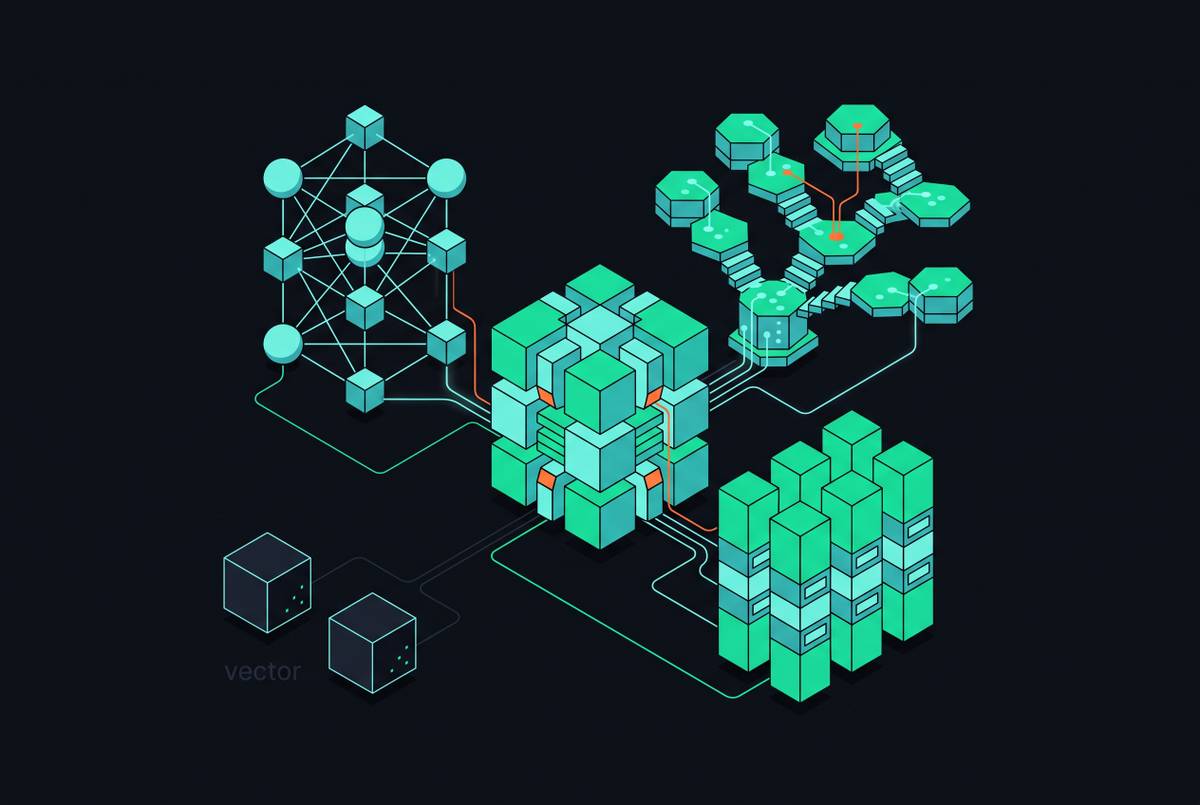
An agent browser built to support this workload typically ships with a remote control endpoint, whether that takes the form of a CDP WebSocket, a REST API, or an SDK, along with anti-bot handling, session state that persists across runs, and observability tools: live view, replays, network logs, and console logs. Headless remote browsers differ from live, user-attached sessions in a specific way: a headless browser runs outside the user's active session, so authenticated state has to be explicitly copied into it, while a live session inherits the user's existing context but comes with latency and visibility constraints that make it a poor fit for background, multi-tenant fleet work. Production agent fleets favor the headless remote model for this reason: the infrastructure manages timeouts, bot mitigation, and the scaling of browser instances, and agents connect through standard automation protocols into a clean, dedicated execution environment. What actually limits these systems is not the model's reasoning but execution reliability against the modern web. An unhydrated React Suspense boundary, an Angular component mid-update, a Shadow DOM element, or a cookie banner over the page can each make an action fail, even when the model picked exactly the right thing to do.
How isolation beneath a browser session governs persistence reliability
The choice of isolation primitive beneath a browser session is a core infrastructure decision, not a secondary detail. It decides whether the session state sitting on top of it can be trusted, recovered, and reused safely across runs. A standard container shares the host's kernel, so a kernel vulnerability can let code inside the container escape to the host machine. Hardening measures like seccomp filters, dropped capabilities, and a read-only root filesystem add real defense-in-depth, but none of them build a kernel-level wall between workloads.
A micro-VM solves this differently by giving each workload its own kernel, running on hardware virtualization through KVM. A kernel exploit inside one micro-VM cannot reach the host or any other VM running alongside it, which is the correct boundary for an agent that is executing untrusted page content and holding onto credentials at the same time. Firecracker, the micro-VM technology AWS built for this purpose, achieves this isolation with per-microVM memory overhead under 5 MiB and boot times under 125 milliseconds to userspace, which keeps the isolation economically viable even for fleets where most sessions sit idle most of the time.
The durability of session state, the cookies, the profile data, the authenticated tokens, depends directly on the persistence of the storage layer underneath it. In a container torn down between runs, that state disappears unless it is explicitly extracted before teardown and reinjected on the next run, a workaround that reintroduces the exact re-login problem persistence is meant to solve. A persistent disk attached to a VM avoids that problem by design: files, credentials, and browser profile state stay in place across the gap between invocations, with no application-layer ceremony required to carry them over. Session-state durability and tenant security converge on a single requirement: an isolation boundary strong enough to keep one tenant's credentials from leaking into another tenant's browser is also the boundary that lets session data survive reliably between runs.
How snapshot-restore changes browser session economics
Micro-VM isolation solves the reliability problem, but it raises an obvious economic objection: if spinning up that isolation is slow, the only way to keep an agent responsive is to leave its VM running continuously, and idle compute across a large fleet becomes the dominant line item in the bill. Consider the actual rhythm of an agent's work. It creates a browser environment, executes one action such as a click or a form submission, and then waits, on a model call that might take several seconds, on a human reviewing an approval, on a queue clearing elsewhere in the system. If the VM backing that session cannot be torn down and rebuilt cheaply, it has to sit warm through that entire wait, reserving CPU and RAM for a browser that is doing nothing. Multiplied across a fleet with many mostly-idle tenants, the compute bill ends up dominated by the cost of waiting.
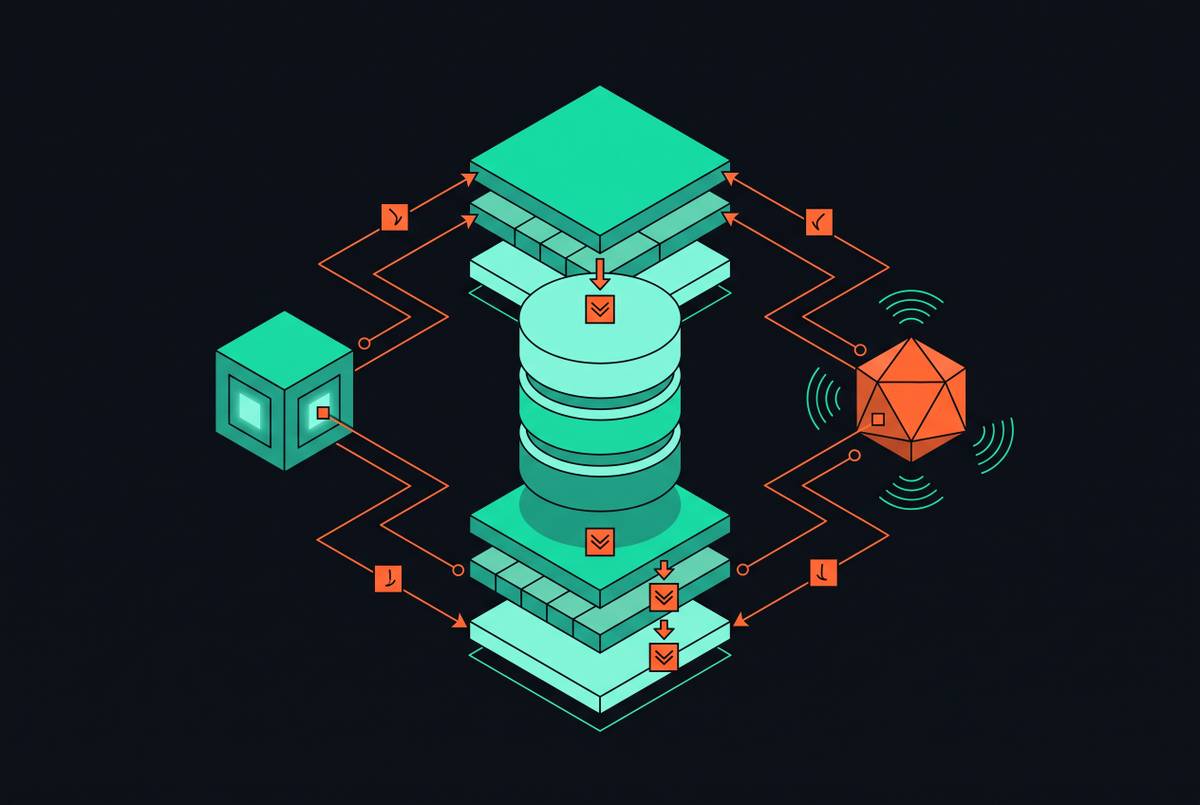
Fast snapshot-restore removes that tradeoff. The platform captures the browser's full state, including session cookies, the profile, and the exact position in the authenticated workflow, then destroys the VM and frees the host machine. When the next request arrives, it restores that state in well under a second. Idle time shifts from a standing per-tenant charge to something close to zero. The gain extends to raw speed, not just cost: a single persistent session reused across page navigations cuts per-inference latency from roughly a thousand milliseconds during cold initialization down to under a millisecond once the session is warm, which makes a correctly snapshotted session both cheaper to run and faster to respond than one initialized fresh for every call. A multi-tenant agent fleet should pay for storage while a session sits idle, and pay for compute only while it executes. That posture is only available to a fleet whose snapshot-restore is fast enough that destroying and recreating a VM costs less than keeping it warm.
The stateless MCP specification and agent browser state
The Model Context Protocol changed in a way that moves responsibility for session continuity out of the protocol and into application code. The July 2026 MCP specification made the protocol stateless, retiring the initialize handshake and the Mcp-Session-Id header that previously pinned a client to one specific server instance. Browser session state can no longer ride along implicitly inside the protocol layer; it now has to be tracked explicitly by whatever application is managing the browser fleet.
Under the prior design, that handshake and header did real work: an agent that needed to return to the same browser session relied on that stickiness to make sure its requests kept landing on the server instance holding its state. Under the 2026-07-28 specification, servers that need to carry state across calls are expected to mint an explicit handle instead, something like a basket_id, a browser_id, or a workflow_run_id, returned by a tool call and passed back by the model as an ordinary argument on the next call. For browser automation specifically, the server still has to know which browser session a given tool call is driving, and tracking that mapping is now the application's job. The browser session handle becomes a first-class argument threaded explicitly through the agent's tool-calling loop, rather than something hidden inside a header that silently breaks the moment a load balancer routes a request to a different instance.
This arrangement suits persistent agent workflows better than the old one. An explicit handle is auditable and portable across server instances in a way a protocol-level session header never was. Agent integrations that previously needed sticky sessions and a shared session store can now run on ordinary HTTP hosting behind a plain load balancer, which simplifies the infrastructure required to scale a browser fleet without giving up session continuity. Schema loading for MCP tools can consume a large share of a model's context budget, so tool schemas for browser control need to be designed deliberately, with scoped permissions and typed interactions, so that audit requirements are satisfied without the context window filling up with tool definitions before the agent has read the actual request.
How multi-tenant browser fleets introduce session contamination risks
Session persistence across a fleet shared by many tenants creates a risk that goes beyond a conventional security breach: one tenant's authenticated state leaking into another tenant's session, invisible at the application layer, and severe wherever it occurs in production. Containing that risk requires a genuine compute and storage boundary around each session or tenant. Without one, a persistent cookie or a cached credential from one session can bleed into the next session that happens to spin up on the same host.
Default-deny network access and task-scoped credentials limit what a compromised agent can reach even if contamination does occur, and per-tenant allowlists stop one customer's browser from inheriting destinations another customer approved. The architecture that enforces this separates a control plane, which handles decisions and records, from an execution plane, where browser activity actually runs inside isolated sessions. A stateless gateway authenticates each incoming request and routes it to a session broker, which resolves the full composite principal (tenant, agent, delegated user, and task) before any browser action is allowed to execute. Dedicated services hold the durable state so that gateways and schedulers can scale horizontally without carrying session data themselves, which is what lets the control plane and execution plane split cleanly at scale.
The application layer cannot see a second contamination vector. Hostile content embedded in a web page can issue instructions that an agent follows as though they were legitimate parts of its task. Research into Claw's background execution model shows how heartbeat-driven execution, which runs on a scheduler between a user's explicit invocations, creates a silent memory pollution pathway: content encountered in one session, including ordinary misinformation rather than only deliberately crafted injection attacks, can enter the agent's memory and shape its behavior in later sessions. Session-scoped destruction is the defense that matches this threat: when a session ends, the platform destroys its writable state by default, unless an explicit policy preserves specific data, confining the damage from a compromised session to that session alone.
Production browser session persistence end to end
A production-grade persistent browser session is not one feature but the composed result of decisions made independently at four layers, any one of which can fail on its own. At the isolation layer, each session runs inside its own micro-VM with a persistent disk attached, the kernel boundary keeps sessions from contaminating one another, and the disk retains cookies, profiles, and authenticated state between invocations without any application code having to shuttle that state around manually.
At the scheduling layer, the VM is snapshotted and destroyed the moment the agent starts waiting on a model call or on human input, and restored in well under a second once the next action is ready to run. The agent pays for storage during that wait, not for idle compute. At the state management layer, the stateless MCP specification means the model passes the browser session handle explicitly as an argument on every tool call, and the application owns that handle's lifecycle from creation to retirement, so you get session continuity that is both auditable and portable across server instances. At the fleet containment layer, a session broker resolves the full composite principal before any browser action executes, and per-tenant allowlists, default-deny network policy, and task-scoped credentials are enforced in the infrastructure itself rather than left to application code that was never built to carry that responsibility. Sitting alongside all four is an observability layer, live view, replays, network and console logs, that makes the whole system debuggable: without it, a multi-step failure inside a persistent session is close to impossible to diagnose after the fact.
Serverless browser infrastructure that spins up a fresh context on every invocation avoids none of these problems; it just relocates them. The application has to re-inject session material by hand, it pays a re-authentication cost on every run, and it inherits the burden of preventing contamination without the infrastructure built to carry it. Getting the four layers right instead is what makes the per-user agent model, a fleet where every user gets an isolated, snapshotted, persistent browser session of their own, economically workable. Such a fleet scales in storage cost during periods of low activity rather than in compute cost, so the bill reflects the work actually performed, not the idle time the fleet happened to accumulate.