The User-Facing Failure Modes That Reveal a Serverless Agent Has Hit Its Structural Limit
Serverless agents fail silently when stateless execution erases the context needed to continue.
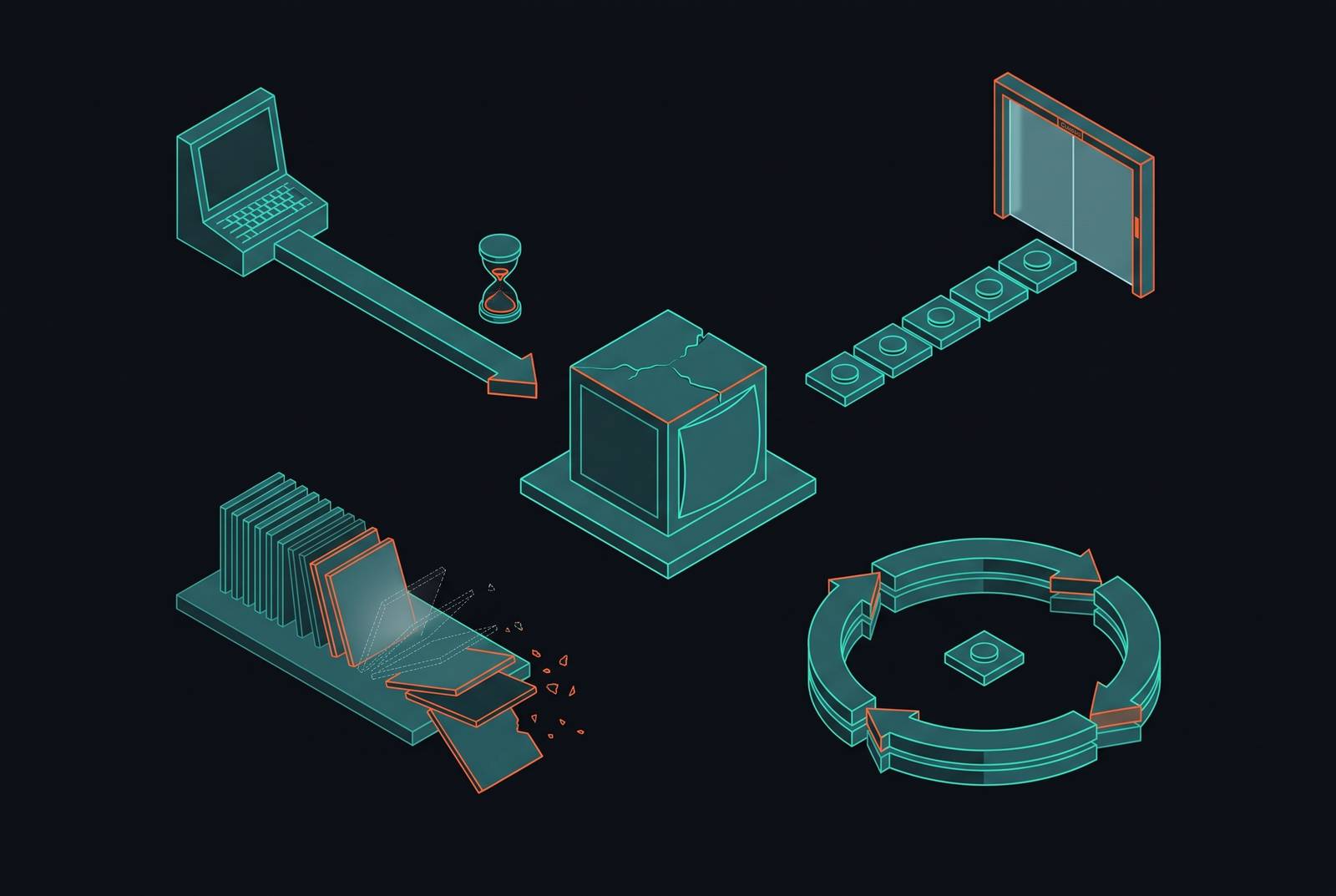
Persistent AI agent infrastructure and serverless functions differ in whether they keep execution state between steps. Long-running agents need that continuity to recover from failed tools, manage context, and control how much of the shared quota they use. Without that continuity, infrastructure limits cause apparent reasoning failures in long-running agents, including forgotten instructions, repeated actions, and unfinished tasks. Diagnosing these failures requires checking whether the runtime preserves what the agent needs to continue, even when the model can reason through another step.
Why serverless agents fail in ways that look like user error, not infrastructure error
A user asks an agent to finish a task, watches it start, and gets an answer that ignores an earlier instruction. The response may still sound confident and complete. Nothing identifies the point where execution went wrong. The user sees an agent that misunderstood the request, while the developer sees what looks like a flaw in the prompt or reasoning. Both interpretations can miss a failure in the runtime supporting the task.
The mismatch begins with the unit of execution. Serverless assumes brief, stateless invocations, while agent workflows require persistent context, multi-step planning, and consequences that survive across sessions. A successful invocation therefore does not establish that the agent retained enough history to complete the larger task. When that history disappears, the next step can be technically valid but disconnected from the work already done.
This distinction changes where a repair belongs. A clearer prompt cannot recover execution state that the runtime discarded, and a stronger model cannot inspect a tool result it no longer has. Improvements at the model layer may soften the visible symptom without removing its cause.
How quota exhaustion presents as agent stupidity
An agent stops halfway through a task, repeats itself, or gives no answer. Yet the immediate constraint may be capacity rather than reasoning, because the model provider has no quota available for the next call. This failure is especially confusing when the compute infrastructure appears healthy and continues accepting work.
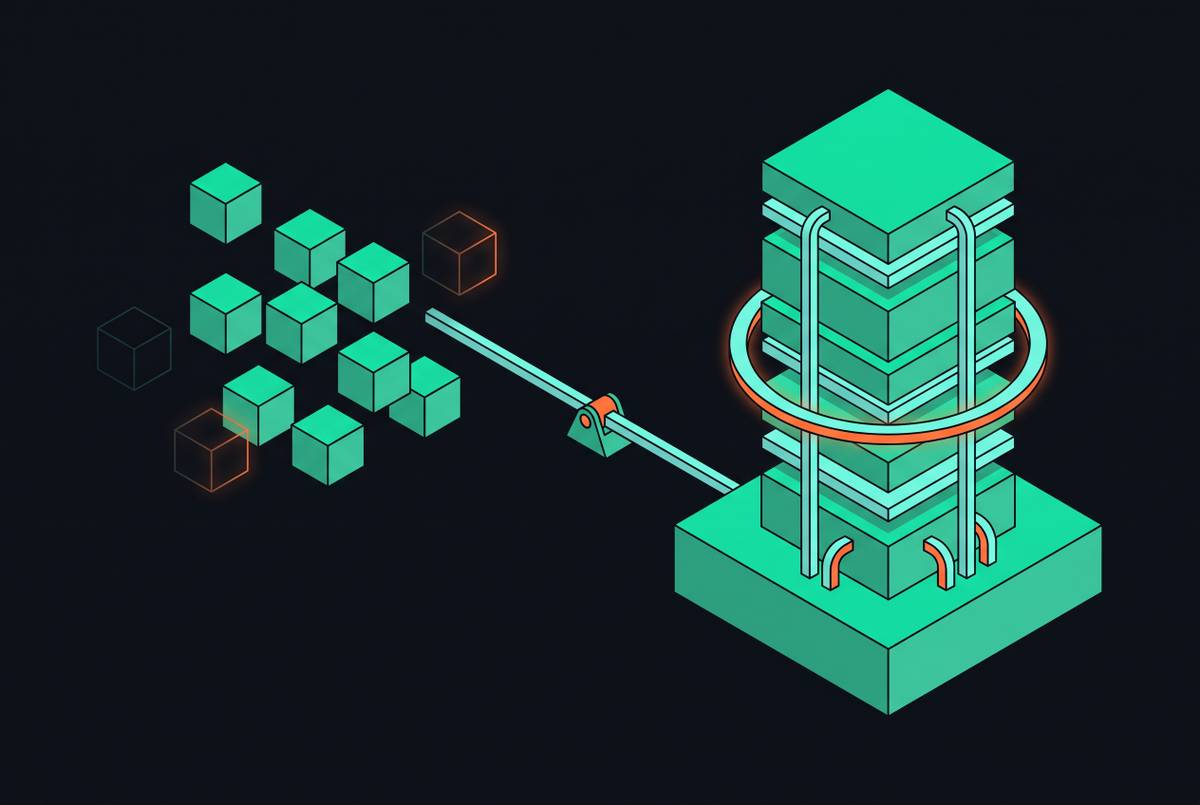
Serverless autoscaling can amplify that gap. As traffic rises, more agent instances launch, and each draws from the same fixed provider quota.
Planning, tool selection, reasoning over results, retries, and sub-agent calls all consume quota, so even a small number of concurrent users can exhaust the available allowance. A late arrival may be blocked before its model runs once. The relevant load is the combined call fan-out of active tasks.
Immediate retries deepen the same failure. Each new attempt hits the exhausted quota, and the retry storm competes with the work that is left. Instead of a clear capacity error, the user receives an incomplete answer, a stalled task, or silence. The serverless layer has absorbed the traffic spike without resolving the dependency that prevents completion.
How stateless invocations produce infinite loops and agent paralysis
A spinner that never stops can represent two opposite behaviors. The agent may be repeating the same failed action, or it may be unable to choose any action at all. One is excessive activity and the other is paralysis. Both can arise from the same structural absence, which is a durable record of what the agent has tried and why it failed.
A malformed tool response can trigger the repeating case. Without history that lasts across invocations, each new invocation hits the failure without knowing that an earlier attempt had the same result. The agent therefore lacks the accumulated evidence needed to recognize that another identical call will not advance the task.
Paralysis begins from a different trigger. Two tools may give contradictory signals, or no available action may satisfy the success criteria. Without a persistent scratchpad, the agent has nowhere durable to record the contradiction and develop an exit condition across steps.
A timeout ends an invocation while uncertainty may persist. If task context existed only in transient memory, the runtime can discard the information needed to explain or resume the work. Before that timeout, the infrastructure may report an invocation that is still running. The user sees a frozen agent, but the missing capability is continuity across attempts.
How silent context truncation corrupts multi-step and multi-agent work
An agent forgets an instruction, contradicts an earlier response, or confidently answers a question the user did not ask. Unlike a stalled task, this failure can look complete. Its defect appears in the relationship between the answer and the original request. The apparent memory lapse may therefore pass through ordinary execution monitoring unnoticed.
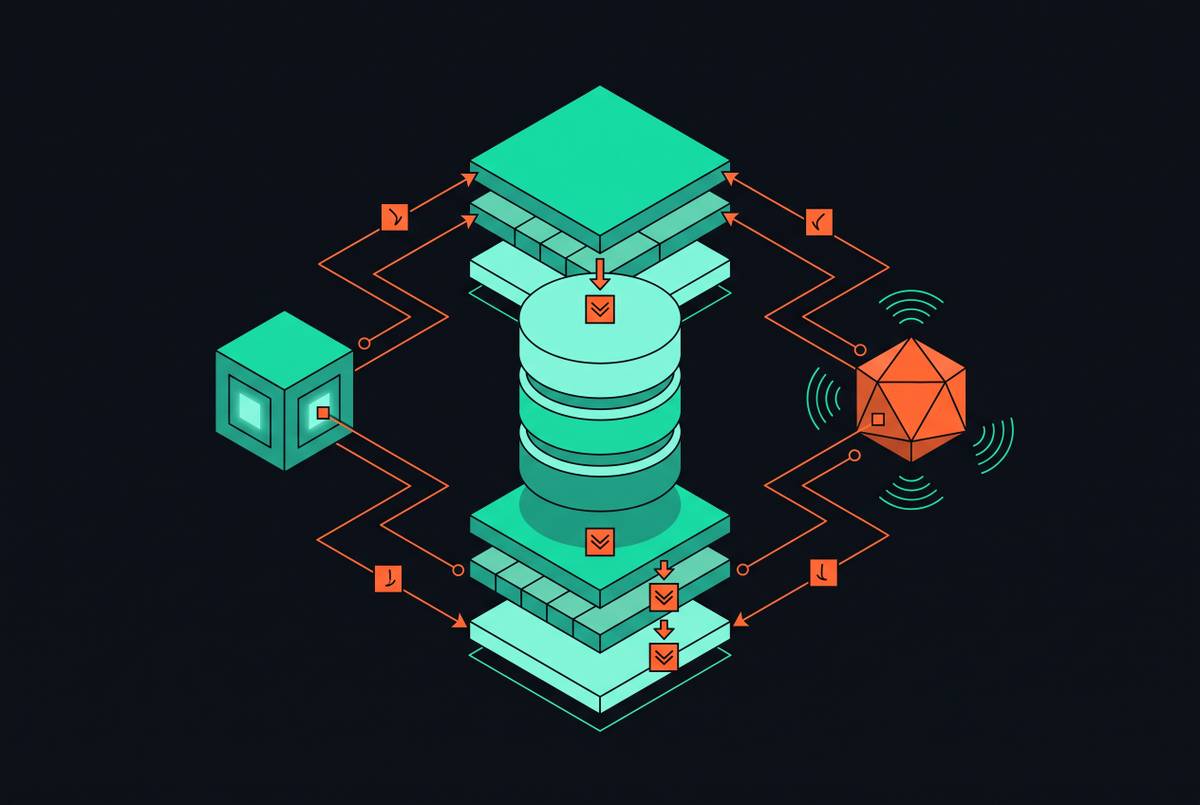
As context builds up, this failure gets harder to find. Each step adds reasoning traces and tool output, and each new agent can add more to the shared context. Without compaction or summarization between steps, that context grows until something is dropped, often the earliest and most foundational information. A downstream agent then reasons from an incomplete account of the task.
The Oxford synthesis across 27 benchmark and audit papers identifies long-horizon degradation from context accumulation as one of its six primary failure clusters. It finds that performance can collapse before context windows are technically exhausted. Nominal capacity is not the same as usable memory. Fitting more text into a request does not establish that the agent can preserve the dependencies within it.
The stateless invocation itself provides no persistent workspace for managing, compacting, or checkpointing that material. Without a separate persistent layer, the next invocation inherits the supplied context, possibly already truncated, or starts without it. A corrupted output can then become another agent’s input. By the final response, the original loss may be several steps removed from the visible mistake.
How tool-calling failures propagate from a single bad call into a corrupted task
A task can complete against the wrong target because an earlier tool call supplied the wrong foundation. A schema violation, fabricated invocation, or HTTP 200 response with an empty payload can contaminate subsequent reasoning without producing a useful exception. Successful transport does not establish that a tool returned valid evidence.
The same synthesis lists tool invocation and parameter-level errors as another main failure cluster. It reports fabricated tool names and arguments in many different evaluation settings. These errors become especially consequential when a tool changes external state. A hallucinated answer is wrong, while a hallucinated tool call may be irreversible.
The user-facing consequences can include an unwanted record, a payment for the wrong amount, or a completed action against the wrong target. Those outcomes require more than better phrasing to diagnose. The relevant evidence includes the parameters, the preceding context, and the tool result that shaped the next decision. Without that execution context, it is harder to tell a bad action from a next step that seems reasonable.
A persistent system gives recovery a place to operate. It can catch a bad call at the boundary, retain the full execution context, and support a corrected retry or escalation while the workspace survives. Persistence preserves the scaffolding needed to contain an error and retain the explanation for a corrupted result.
Why these failure modes compound non-linearly as task length and agent count grow
Longer tasks expose the agent to more than additional steps. They increase quota consumption, accumulate context, create more opportunities for tool errors, and leave more time for loops or paralysis to develop. A failed call can lead to retries that use quota and add more to an already crowded context.
The synthesis finds that failure compounds non-linearly with task length and that sub-skill competence does not reliably compose into end-to-end success. The distinction is between local competence and sustained execution. Evaluating the former alone leaves the dependencies between steps untested.
The Massey/RMIT resource constraints study documents substantial differences in resource consumption across agent harness configurations. The more complex OpenClaw harness used roughly 3× more wall time and 19× more peak memory than NanoBot without a demonstrated completion advantage. Additional machinery therefore cannot be treated as evidence of improved completion. Its resource burden and its reliability benefit are separate questions.
With multi-agent coordination, more parts of the work depend on one another. Each agent has its own context window, risks from tool calls, and share of quota use, while coordination can lead to conflicting outputs or contradictory state that no agent produces alone. Its overhead can erase the benefits of parallelism. Without persistent task history, no individual stateless invocation has a complete view of the cross-step and cross-agent pattern producing the failure.
Persistent AI agent infrastructure vs serverless functions
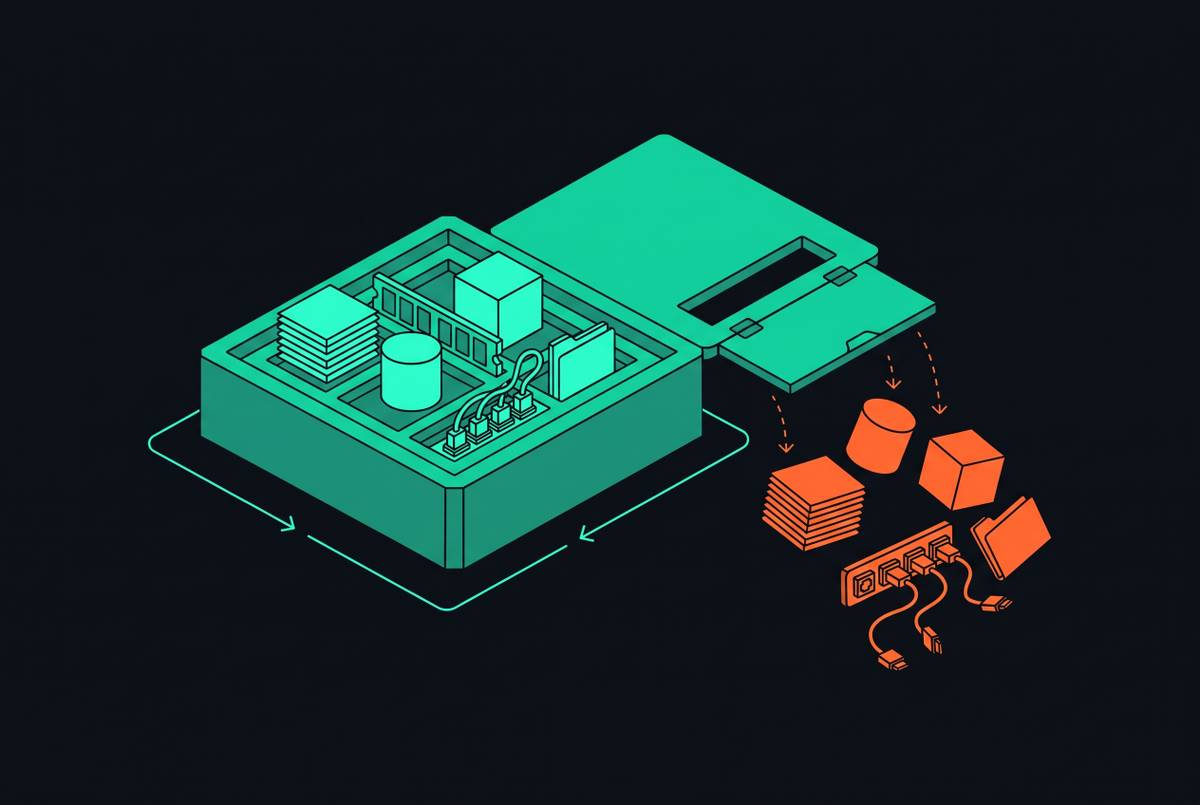
The structural comparison turns on durable state, workspace continuity, quota control, and observable execution history. A stateless function does not supply these capabilities across invocations by itself. Persistent infrastructure gives the agent a place to keep context, intermediate results, and earlier attempts between steps and across sleep-wake cycles. That history supports repeated-failure detection, exit conditions, and coherent handoffs without relying on one growing context payload.
A dedicated micro-VM adds an isolation boundary around that workspace. With its own kernel, the agent can install tools, write to disk, maintain browser sessions, and recover from a bad tool call without corrupting shared state used by other agents. Persistence and isolation serve different purposes. The former preserves the task, while the latter contains its effects within the agent’s environment.
A persistent runtime can also provide quota control by maintaining the task-level view needed to control consumption rather than letting every new invocation launch its fan-out independently. Observable execution history also shows repeated failures in the order they happened. Neither capability makes model calls infallible, but both address limits that prompt changes leave untouched.
Snapshot-restore scheduling addresses the cost of keeping that continuity. Because agents are idle most of the time, a system that snapshots state to disk and restores in under a second can charge idle agents only for storage. A per-user agent with its own isolated VM and persistent disk also creates a clear unit for cost attribution and governance. Hot-spot users become visible at the user level, and one user’s runaway task need not disrupt another’s workspace.
How developers can tell they are patching symptoms rather than solving the architecture problem
The clearest diagnostic is recurrence under a different surface presentation. Better prompts cut down on fabricated tool calls, but longer tasks still lose context. Retry logic reduces visible failures, but load brings back quota amplification. More careful exit conditions cut down on loops, while a new tool configuration leads to paralysis. The visible behavior changes without eliminating the underlying dependence on missing state or uncontrolled shared capacity.
The repair’s location provides a second test. When the failure originates in stateless execution, shared quota, or a missing workspace, a change confined to the prompt, model, or guardrail leaves that constraint intact. Observability offers a related signal. Reconstructing task history from logs scattered across invocations is different from reading a continuous execution trace that preserves the agent’s progress and failures.
The synthesis’s finding that additional scaffolding improves reliability inconsistently limits what added complexity proves. A patch may be useful while leaving the underlying architectural constraint intact. The distinction depends on whether it restores the missing capability or only changes how the failure appears.
Hybrid architectures provide a legitimate counterpoint to full per-agent persistence. A persistent orchestrator coordinating ephemeral workers can retain orchestration state without giving every worker a persistent VM. By itself, however, it does not establish per-agent isolation, per-user cost attribution, or a persistent workspace for managing tool-call side effects.
For diagnosis, the decisive evidence is a runtime artifact, such as a checkpoint, durable log, or workspace file, that shows what the system preserves when execution stops or moves between steps. If a recurring failure has no such durable support, the gap is structural. For each recurring failure mode, can the developer point to a persistent runtime artifact that the architecture creates and maintains?