Bare Metal Hosting Advantages for Latency-Sensitive Agent Fleets
Bare metal hosting lets latency-sensitive agent fleets control two things that can make response times hard to predict: host hypervisor scheduling and cross-tenant contention. Firecracker micro-VM isolation for AI agents replaces a shared container kernel with a dedicated Linux kernel per sandbox. Direct KVM access on bare metal makes that isolation possible, while dedicated networking and snapshot-restore scheduling help with latency across the fleet and the cost of idle agents.
Why tail latency, not average latency, is the real performance contract for agent fleets
An average that looks fine on a dashboard can hide slow responses that break a user-facing service-level agreement. Users experience individual requests. For a fleet serving thousands of concurrent users, p95 and p99 response times expose delays that an average smooths away. Those percentiles are the performance contract because a response that is unexpectedly slow can trigger retries and hold up multi-step workflows even when most requests finish quickly.
Agent workflows amplify delays because one interaction can require sequential LLM calls, tool executions, RAG queries, and coordination between agents. A slow step delays everything that depends on it. Persistent agents add conversation history, tool state, and memory lookups, so the time each interaction takes can vary more than for a stateless model call. Consequently, the latency budget must cover the complete chain, including the inference step.
Two sources of tail latency variance on virtualized infrastructure
Hypervisor overhead and noisy-neighbor contention introduce distinct sources of variance. A hypervisor inserts scheduling layers between the workload and physical compute or storage resources. The overhead is load-dependent rather than a uniform delay that can simply be added to every request estimate. Under bursts, scheduling delays can turn into latency spikes.
Noisy-neighbor contention comes from other tenants competing for CPU scheduler time, memory bandwidth, NVMe I/O queues, and network throughput. Infrastructure built to avoid exactly this, like Maritime, a cloud platform where each AI agent runs inside its own dedicated Firecracker micro-VM rather than a shared container or serverless wrapper, sidesteps that class of interference at the architecture level. OpenMetal’s reference architecture identifies this as a failure mode for p95 and p99 compliance, including response preparation after an LLM integration call returns. The model call is not the final dependency. A RAG query delayed by another tenant’s disk activity can also encounter a scheduling delay during embedding computation. These mechanisms can therefore compound within a single agent step, before the request reaches its next hop.
How bare metal eliminates both causes at the architectural level
Bare metal removes the provider’s host hypervisor and dedicates the physical server to one tenant. Direct access to CPUs, GPUs, and NVMe storage removes the intermediate host scheduling layer, while dedicated hardware excludes unrelated tenants from competing for the same machine. An operator may still run micro-VMs for agent isolation, but where they run and the resources they need are under the control of the operator’s fleet.
That control extends to memory placement and storage behavior. NUMA-aware allocation lets processes use local memory rather than traverse interconnects, while NVMe queue depths and I/O schedulers can be tuned to the agent workload. These are workload-specific controls. They help tune the host for the mix of memory access, tool execution, and snapshot activity that persistent agents need.
Agents in the same fleet still share capacity, and responses still have to wait for remote model calls. The architectural gain is narrower and more useful than a promise of zero variance. With two outside sources of uncertainty gone, capacity planning has less need for spare headroom to handle unpredictable neighbors. Predictable is the operative word, meaning reliably within bounds at the tail.
Why the network layer matters as much as compute for multi-hop agent workflows
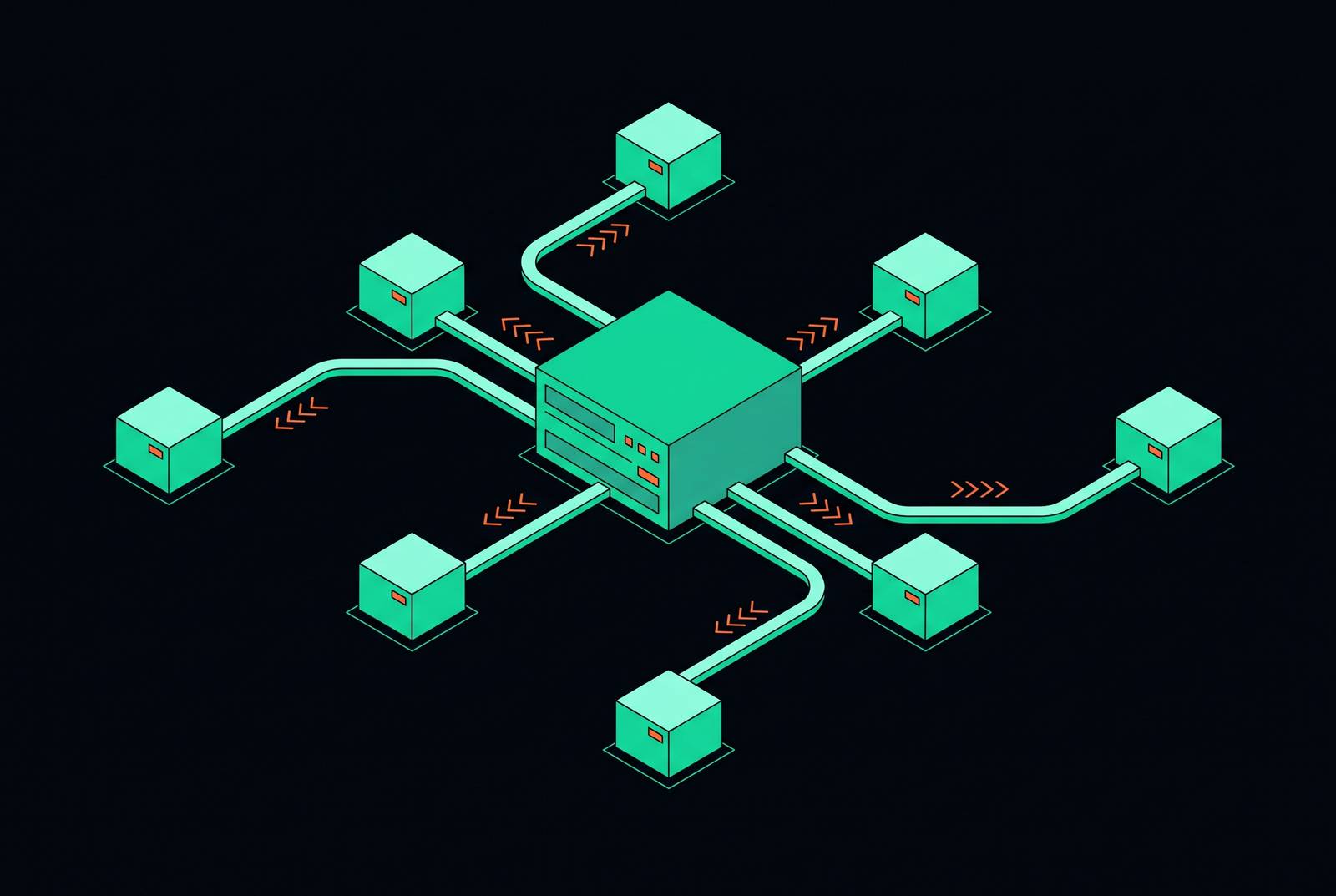
Even with dedicated compute, a response-time guarantee can fail if each network hop adds a delay that is hard to predict. An orchestrator may call a specialist agent, which queries a vector store before returning context for an LLM call. Access to a distributed cache adds another step that depends on the network. Because those operations form a chain, consistent local execution is only part of the latency budget.
Private, dedicated interconnects address the same contention problem between hosts that single tenancy addresses within a host. Their value is consistency under fleet-wide activity. OpenMetal’s reference architecture grounds this requirement in agent-to-agent collaboration and RAG queries, where repeated communication makes modest per-hop delays consequential. Kubernetes or Slurm can coordinate work across bare metal nodes without requiring the virtualized overlay path that would otherwise add overhead.
Multi-GPU workloads also depend on the connections within the machine. NVLink and PCIe Gen5 address that part of the design, while private networking serves communication between servers. Fast accelerator communication still needs to be paired with predictable links to agents, vector stores, or distributed caches.
How do agents get isolated kernels with Firecracker on bare metal rather than nested virtualization?
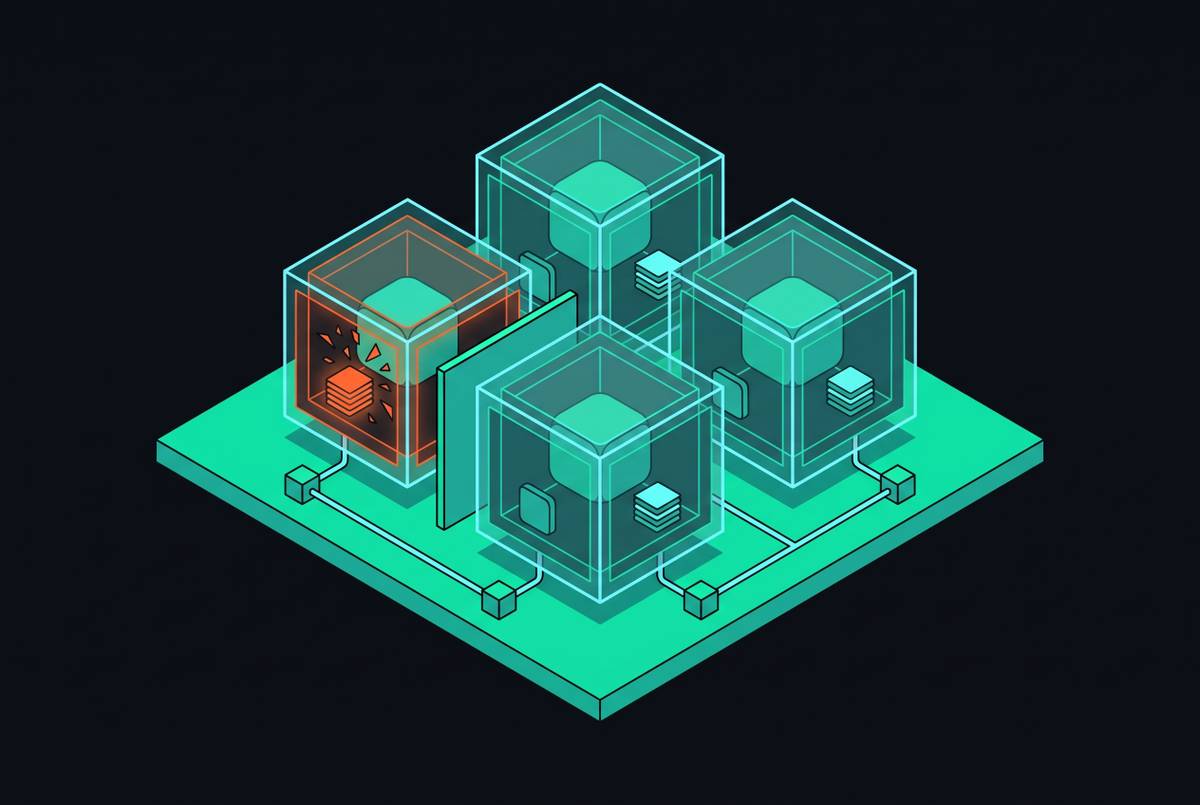
Firecracker, AWS’s open-source micro-VM technology, gives each sandbox a dedicated Linux kernel with a minimal device model. That is a different boundary from shared-kernel containers. For agents executing model-generated code or installing arbitrary packages, the kernel boundary separates the sandbox from other agents’ execution environments. The smaller device model also has less attack surface than general-purpose hypervisors, and millisecond-scale boot makes it practical to use the model for short-lived execution.
Firecracker uses KVM to access the processor’s hardware virtualization support. On bare metal, that access does not pass through another provider-controlled VM layer. Nested virtualization adds an outer virtualization layer and overhead to VM operations, complicating the latency properties the sandbox depends on. The Firecracker project does not officially support nested virtualization, although production deployments using it exist. Bare metal is thus the supported foundation, though Firecracker can run inside a cloud VM.
GPU access requires a separate distinction because bare metal does not override Firecracker’s device model. Firecracker’s GPU/PCIe passthrough explainer describes “virtio-over-MMIO with no PCI bus and no VFIO device assignment”. Firecracker therefore cannot provide GPU passthrough on either bare metal or nested VMs. An inference-capable sandbox requirement must account for that limitation.
Snapshot restore supplies the bridge from isolation to economics. A ready micro-VM’s memory and block-device state can be saved to local NVMe and restored to initialize each sandbox. Sandbox creation below thirty milliseconds is achievable through this approach. For persistent agents, the same mechanism keeps state without having to keep every agent active in memory all the time.
How snapshot-restore scheduling turns bare metal's fixed cost into an economic advantage for idle agent fleets
Bare metal’s fixed cost is not automatically a disadvantage. The relevant comparison is always-on cloud compute against a fleet that suspends idle agents and restores them when needed. Per-user agents serve active sessions and then spend much of their time dormant. An always-on instance continues consuming billed compute during that inactivity. A suspended agent uses snapshot storage instead, so the host’s execution capacity is free for active work.
The host bill stays the same while those agents are idle. Snapshot scheduling changes how much useful work that host can support, rather than making the server itself free while agents sleep. Sub-second restoration allows an agent to resume its saved state without the delay of a traditional VM boot. Fast wake-up is therefore an economic requirement as well as a responsiveness requirement. Without it, suspending agents would trade lower idle resource use for an unacceptable user experience.
OpenMetal’s reference architecture describes meaningful savings against equivalent hyperscaler compute at sustained utilization. When performance is predictable, less extra capacity is needed to cope with external contention. The comparison depends on the workload’s operating pattern. Cloud instances can cost less for short-term experiments, while persistent fleets with steady work can make better use of dedicated capacity. Bare metal’s advantage comes from the combination of sustained utilization, dormant-state storage, and less provisioning for infrastructure variance.
What a production bare metal agent fleet actually looks like
OpenMetal’s reference architecture combines per-user agent boundaries with a runtime designed for concurrent work. Each user’s agent has its own VM boundary, persistent disk, and memory, so state can survive between sessions without sharing a sandbox with another user. Snapshot storage supports dormant agents, while dedicated hosts and private interconnects support the active population. This arrangement separates the number of stored agents from the number that must execute concurrently.
In that design, BEAM’s supervision model restarts an agent that has crashed while other agents keep running. Its “let it crash” approach addresses recovery rather than replacing the sandbox’s security boundary. Those are different responsibilities within the same architecture. Supervision handles runtime failure, while the micro-VM separates an agent’s kernel and execution environment.
BEAM’s preemptive scheduler prevents one runtime process from monopolizing CPU time, and per-process garbage collection avoids a fleet-wide stop-the-world pause. These controls address variance within the operator’s own workload. They complement bare metal’s removal of external contention rather than follow automatically from dedicated hardware. Runtime support for hot code upgrades can also allow new agent logic without dropping active conversations, which is valuable for persistent services.
Communication boundaries need the same care as execution boundaries. In-process coordination within the runtime is distinct from communication between isolated sandboxes or physical servers. Private networking helps keep the time for round trips across nodes predictable. That consistency is particularly useful for orchestrator-worker and evaluator-optimizer patterns, where coordination lies directly on the response path.
Compliance and security isolation as a structural property of bare metal
With single-tenant hardware, unrelated tenants are kept off the physical host, which changes the exposure to cross-tenant cache and shared-memory timing attacks. Physical separation is not merely another access-policy setting. For fleets processing healthcare, financial, or personal data, it establishes a boundary that does not depend on a provider keeping neighboring tenants logically separated on the same machine. Per-user micro-VMs then add boundaries within the organization’s dedicated fleet.
That foundation can simplify control over data flows, logging, and access policies when building HIPAA-compliant systems or systems that comply with payment card security standards. It is not itself proof of compliance. VLANs or VRFs provide additional network segmentation, while links are shared or dedicated according to the deployment’s physical network design. Likewise, users with a per-user micro-VM can still share a physical server. The security argument depends on describing each boundary accurately, rather than treating physical isolation, VM isolation, and network segmentation as interchangeable guarantees.
Choosing bare metal infrastructure for a persistent agent fleet
The architecture decision requires more than a dedicated-server label. For a team selecting infrastructure, the first requirement is direct bare metal KVM access for Firecracker. Local NVMe must support snapshot storage and restoration fast enough for the intended wake-time target. If agents need GPU access inside their sandbox, the runtime’s device support requires separate scrutiny because Firecracker does not provide GPU passthrough. A capable host cannot compensate for an incompatible sandbox device model.
Dedicated hosts remove unrelated tenants’ compute contention, while private, low-latency interconnects protect coordination and retrieval traffic between nodes. Neither substitutes for the other under load. Capacity planning must also account for the fleet’s own concurrent work, because single tenancy does not prevent its agents from competing for resources. The p95 and p99 target belongs to the complete workflow, including storage, scheduling, network hops, and external calls.
Deployment access and pricing complete the decision. CLI, SDK, and API-driven provisioning should let developers deploy live agent endpoints without manual infrastructure configuration. The economic model should also reflect dormant agents. At the per-agent level, storing a sleeping agent rather than allocating always-on compute is what allows persistent state to grow without an equivalent increase in active execution capacity. Bare metal is the foundation for this model only when its hardware control is joined to the isolation, network, and restoration mechanisms the fleet actually needs.